
In a world where technology is rapidly evolving, the education sector is certainly not being left behind. Artificial intelligence (AI) is paving the way for a new era of learning, and teachers play a crucial role in harnessing its power to revolutionise education.
Indeed, if we do not embrace AI and teach students how to responsibly and ethically utilise it, we are doing a disservice to the next generation. Instead of being scared of new technology, it’s important to learn about it in order to recognise pitfalls and opportunities, then arm our students with the information they need to harness its power.
In this post, we will explore how AI is reshaping the classroom experience, from personalised learning to enhanced student engagement. Let’s dive into the innovative ways educators can use AI to optimise learning outcomes and create a more dynamic and interactive learning environment for students.

UNDERSTANDING THE ROLE OF AI IN EDUCATION
In order to effectively utilise AI in the classroom, teachers must first understand the role that AI plays in education. By grasping the capabilities and potential of AI, educators can then explore the practical ways to implement AI tools in their teaching practices.
Of course, there’s the great fear that students will now simply plagiarise all their written assignments by using AI. It’s safe to say that written work will never be the same again. Unless every single assignment students write is on paper in front of a teacher, there’s no way to police the use of AI. Furthermore, it won’t set up students for the “real world” in which AI will begin to be used for many jobs.
What’s more worrisome for me is that, with AI, the same ideas will simply begin to get reproduced over and over again, limiting the creation of new ideas and thoughts. It is a time in which we could become stagnant as humans, which is far scarier than a student here or there plagiarising (which we’ve already been dealing with basically forever).
Instead of looking at only the negative, It’s important to consider what benefits AI will have and how humans will be using it in day-to-day lives in their work and personal lives. Considering this, what is it important for students to know? Have them learn how to properly fact check, how to use AI to support and enhance their ideas (rather than simply create them for them), and teach them how to ethically use it (for example, putting others’ work into AI is a hard no-go ethically).
IMPLEMENTING AI TOOLS IN THE CLASSROOM
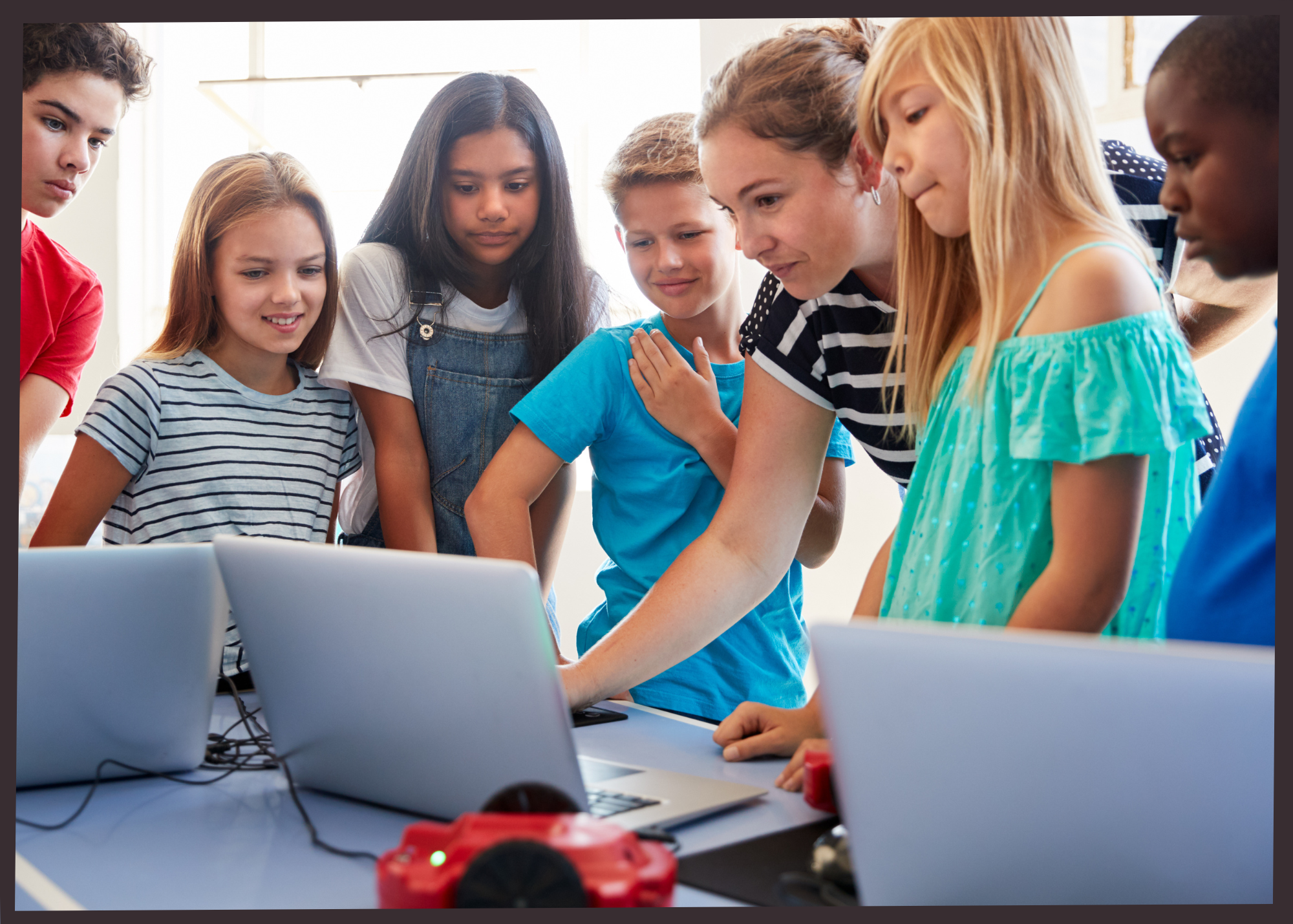
Incorporating AI tools in the classroom can enhance the learning experience for students by providing personalised support and tailored feedback. By implementing AI technology, teachers can create a more engaging and dynamic learning environment that caters to each student’s individual needs, setting the stage for a revolutionised educational experience.
It can feel a little bit like the wild, wild west right now when it comes to AI, but I find the best way to use AI currently is to help students hone their ideas. This is something I’ve done for myself as well when thinking of research topics for my dissertation and helping narrow them down to workable ideas. Depending on your students’ age and the course you’re teaching, you could have them use AI to narrow down a thesis topic for an essay. For example, they can ask AI a question such as “what would a good thesis topic be for Shakespeare’s Hamlet”? They could then continue to ask AI to narrow it down based on their interests. So, after AI provides them an answer they can write back, “that’s good, but I’d like something more to do with gender dynamics and the role of females” and so on until they have a thesis topic they’re comfortable with.
AI can also be useful for helping students write transition sentences or opening and closing paragraphs, which I find they often struggle with. This can help them hone their writing, while not hugely impacting their own ideas. They can ask AI to write them a concluding paragraph for an essay about whatever their topic was, then refine it to ensure it fits with the rest of their essay.
Another great way to have students utilise AI is to have AI write a full essay for them about a topic they’re learning about, then have them edit it. For example, you can break kids into groups and have AI write five different essays about the causes of the French Revolution. AI will spit out five different essays, all of which appear great at first glance. However, AI can’t yet fact-check appropriately and will often spit out random facts or figures that just sound good. Have your students read through in groups to edit an essay, ensuring all of the facts are correct and the essay reads well. They can then hand-in the paper with their changes, clearly showing their knowledge of the content being learned.

PERSONALISING LEARNING EXPERIENCES WITH AI
One of the most significant benefits of incorporating AI technology in the classroom is the ability to personalise learning experiences for students. With AI tools, teachers can tailor their approach to each individual student, taking into account their unique learning styles, interests, and abilities.
By personalising learning experiences with AI, educators can better meet the diverse needs of their students and create a more effective and engaging educational environment. This personalised approach can lead to increased student motivation, achievement, and overall learning outcomes.
For example, you can have AI write you stories for students to read, based on their interests. You can type in something such as “write me a story about a firefighter and a dump truck” (niche, I know). Then, you can even further refine it by giving instructions such as “that’s great, but can I have it written at a grade three reading level” and AI will write it again in a more simplified language. This can be great for getting students more engaged.
One thing to be very careful of is to ensure you do not put any student information into AI. This is an ethical and privacy issue. I’ve heard of teachers copy and pasting student essays into AI and asking it to provide feedback and a grade. Not only does that (obviously) take away your professional judgement and one of your most important roles as a teacher, it’s definitely not okay to put someone else’s work into an internet platform without consent, especially a minor’s who is legally entrusted in your care. Long story short, be careful, be professional, and use your judgement.
Ultimately, by harnessing the power of AI to personalise learning experiences, teachers can empower their students to reach their full potential and succeed in the classroom. This sets the stage for enhanced student engagement through AI, further revolutionising the educational experience.

ENHANCING STUDENT ENGAGEMENT THROUGH AI
By leveraging AI technology in the classroom, teachers can create more engaging and interactive learning experiences for students. AI can help teachers design curriculum that caters to individual student’s needs and interests, making the learning process more exciting and relevant.
As mentioned above, you can create content to enhance your lessons using students’ interests, such as stories or articles. You can also create whole-class examples that pertain to interests, popular movies or shows, current events, or so on.
Additionally, simply utilising AI in class will be engaging in and of itself as students will recognise the technology as being useful and something which will benefit their personal lives and, in the future, their work lives. Knowing that what they are doing has relevance outside of the classroom always helps to make classwork more relevant.
As students become more engaged with the material, they are likely to be more motivated and attentive in class, leading to improved academic performance and overall educational outcomes. This increased engagement through AI sets the stage for a more dynamic and effective learning environment, paving the way for addressing concerns and challenges of AI integration in education.
ADDRESSING CONCERNS AND CHALLENGES OR AI INTEGRATION IN EDUCATION
One major concern surrounding the integration of AI in education is the fear of replacing teachers with technology. While AI can certainly enhance the teaching experience, it is important to remember that technology is a tool to support educators, not to replace them. Teachers play a critical role in fostering creativity, critical thinking, and emotional intelligence in students – qualities that AI cannot effectively replicate. By working hand in hand with AI, teachers can personalise learning experiences, provide mentorship, and offer emotional support that technology alone cannot provide.
Privacy and data security are also significant challenges that come with the use of AI in education. With the vast amount of student data collected through AI-powered tools, it is crucial for educators and administrators to prioritise data protection and privacy regulations. Transparent communication about how student data is collected, stored, and used is essential to building trust with students, parents, and the community. Implementing strict data security measures and ensuring compliance with privacy laws can mitigate the risks associated with AI integration in education.
Furthermore, there is a concern that AI may widen the educational achievement gap by favouring students from privileged backgrounds who have access to the latest technology. To address this challenge, educators must ensure equal access to AI tools and resources for all students, regardless of their socio-economic status. By providing training and support to both students and teachers in using AI technology, schools can level the playing field and ensure that every student has the opportunity to benefit from AI-enhanced learning experiences.
As mentioned previously, there is also the concern that AI will continue to replicate thoughts and ideas already created and mainstream, thus stalling our development as humans. More than ever, teachers become important in supporting our students in using AI as a tool, not something to overtake their own thoughts, ideas, and creativity. We need to support contributions to society and the creation of knew ideas and concepts, not simple rely on previously help beliefs and ideals.
As we navigate the complexities of integrating AI in education, it is important to recognize and address these concerns and challenges proactively. By understanding the potential drawbacks of AI integration and taking steps to mitigate them, educators can harness the power of AI to revolutionise education and create a more inclusive and effective learning environment for all students.

By embracing the power of artificial intelligence in education, teachers can revolutionise traditional learning methods and provide personalised, engaging experiences for their students. It is crucial for educators to stay informed about the latest AI technologies and adapt their teaching approaches accordingly.
As we look toward the future of education, let us remember that with AI, the possibilities are endless. Not only that, it is our responsibility to ensure our students are prepared to utilise AI in their own lives.
As Albert Einstein once said, “The only source of knowledge is experience.” Let’s harness the power of AI to create a brighter future for the next generation of learners.
ENJOYED THIS? HERE ARE SOME OTHER BLOG POSTS ON KATIE IS A TEACHER YOU MAY LIKE:


WANT EVEN MORE? HERE ARE SOME KATIE IS A TEACHER RESOURCES YOU MAY BE INTERESTED IN:


 katieisateacher.com