
Sometimes, teaching fractions can be a daunting task for both students and teachers alike. However, with the right tools and strategies, making fractions fun and exciting for your students can be just a little bit easier.
No matter if you are introducing fractions to your elementary students for the first time, or getting more in-depth with your older students, there are a lot of ways in which you can make your lessons more fun and reinforce concepts with your students.
Here are some of my favourite ideas about how to make teaching fractions a fun and engaging experience for your students.
USE VISUAL AIDS
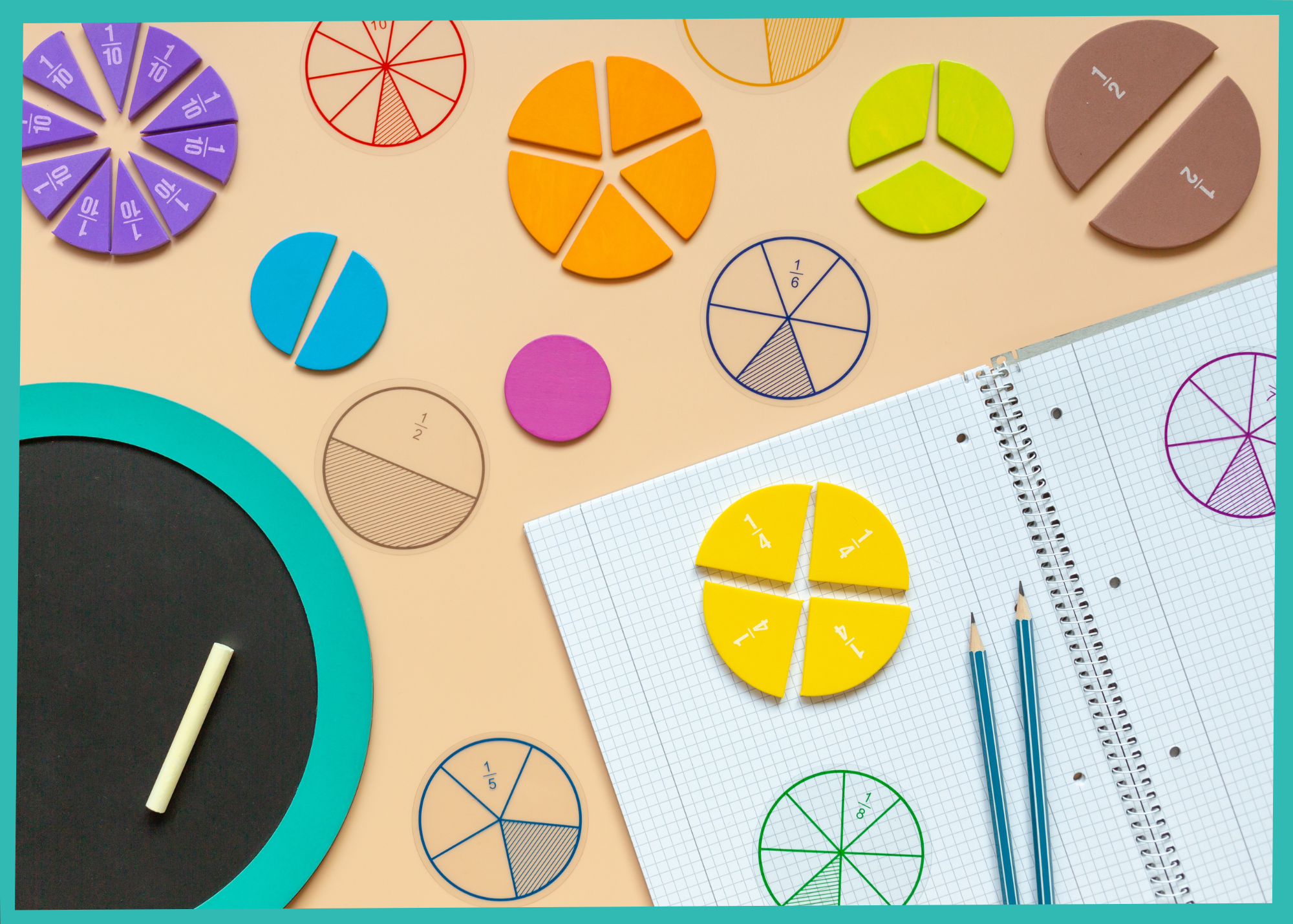
Using visuals is a great way to help students better understand fractions and is an effective way for teachers to make teaching fractions more fun. This way, they can really see the parts of a whole and begin to conceptualize what fractions actually mean and how they show up in their everyday lives.
Visual aids help students to learn more quickly, especially visual learners, by providing a visual representation of the concepts being taught. Visual aids can also help to engage students in learning fractions by providing them with a more interactive experience.
Incorporate visuals such as fraction circles, fraction bars, dice, and fraction tiles into your class. These can help students visualize fractions, which can make the concept easier to understand. When they are able to manipulate them, they will also get a tactile understanding of fractions. Visual aids help to reinforce the concepts taught by providing a concrete example of the concept.

PLAY GAMES
Games are a great way to make fractions fun. In fact, I incorporate games in all of my math units, from elementary all the way up to high school (though the time constraints in high school classes can be tricky sometimes).
I find that playing games is one of my most useful teaching tools as it students are involved, teaching one another, and having fun. Games can provide an interactive way to reinforce key concepts while also encouraging students to be creative and think critically.
Try creating or finding fraction-related games such as fraction bingo, fraction memory, fraction dominoes, or fraction matching. These games can help students to review and practice fractions in an engaging way. You can find games that suit your outcomes and find ones that help students practice and master the skills of adding, subtracting, multiplying, and dividing fractions.
You can play in small groups or as a whole class. For example, I play a fun game where I split the class into two and they all have cards representing different fractions. I put a fraction up on the board and the first team to run up with an equivalent fraction card gets a point. It’s super fun and no one is singled out for being weaker or stronger than the reast, they’re all working together.
Ultimately, by incorporating games into teaching fractions, teachers can make the material more enjoyable and help students become more confident and successful in their studies. They give students an opportunity to practice problem-solving skills in a safe and supportive environment and can help students make connections to real-world applications. Overall, this can help deepen their understanding of the concept and make learning fractions more meaningful.

USE REAL-WORLD EXAMPLES
Obviously, we know that fractions are not just abstract concepts with no relevance to our everyday lives. Rather, they are found all around us every single day. Using real-world examples when teaching fractions is important, as it allows our students to better understand and apply the concepts they are learning in the classroom to relevant and meaningful contexts.
Examples from everyday life provide a tangible connection to the abstract concepts of fractions, helping students to make sense of the material in a more engaging and interesting way. In addition, students are more likely to remember and retain the material if it is presented in a way that they can relate to.
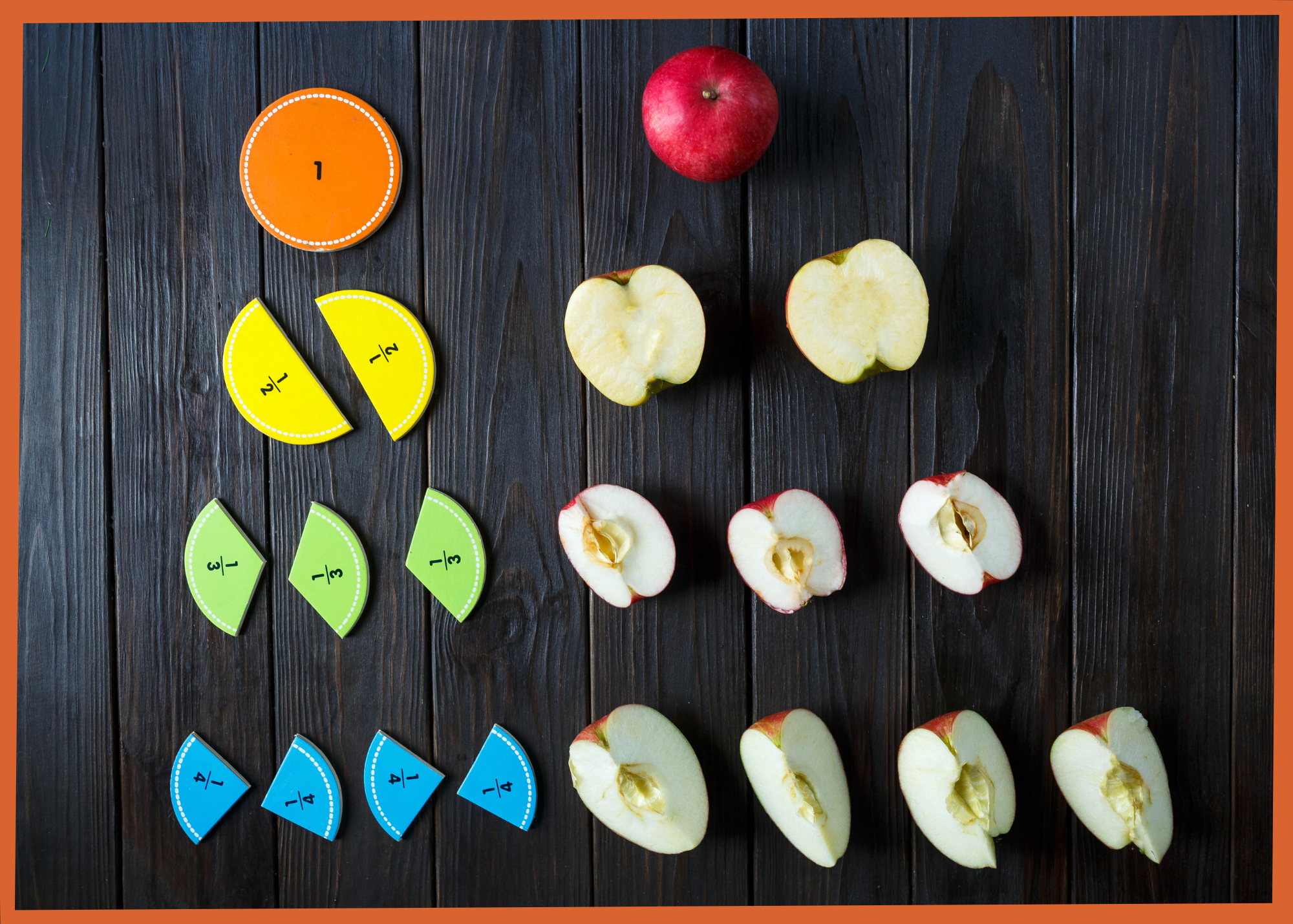
To help this hit home, show your students real-world examples of fractions, such as cutting a pizza into fourths or measuring a cup of flour. You can do this with actual pizzas, creating recipes or showing students recipes, and do on. This can help students to better understand the relevance of fractions in their everyday lives.
By using real-world examples, teachers can make teaching fractions more fun and engaging for students, which in turn can lead to increased student motivation and improved academic performance.
UTILISE HANDS-ON ACTIVITIES
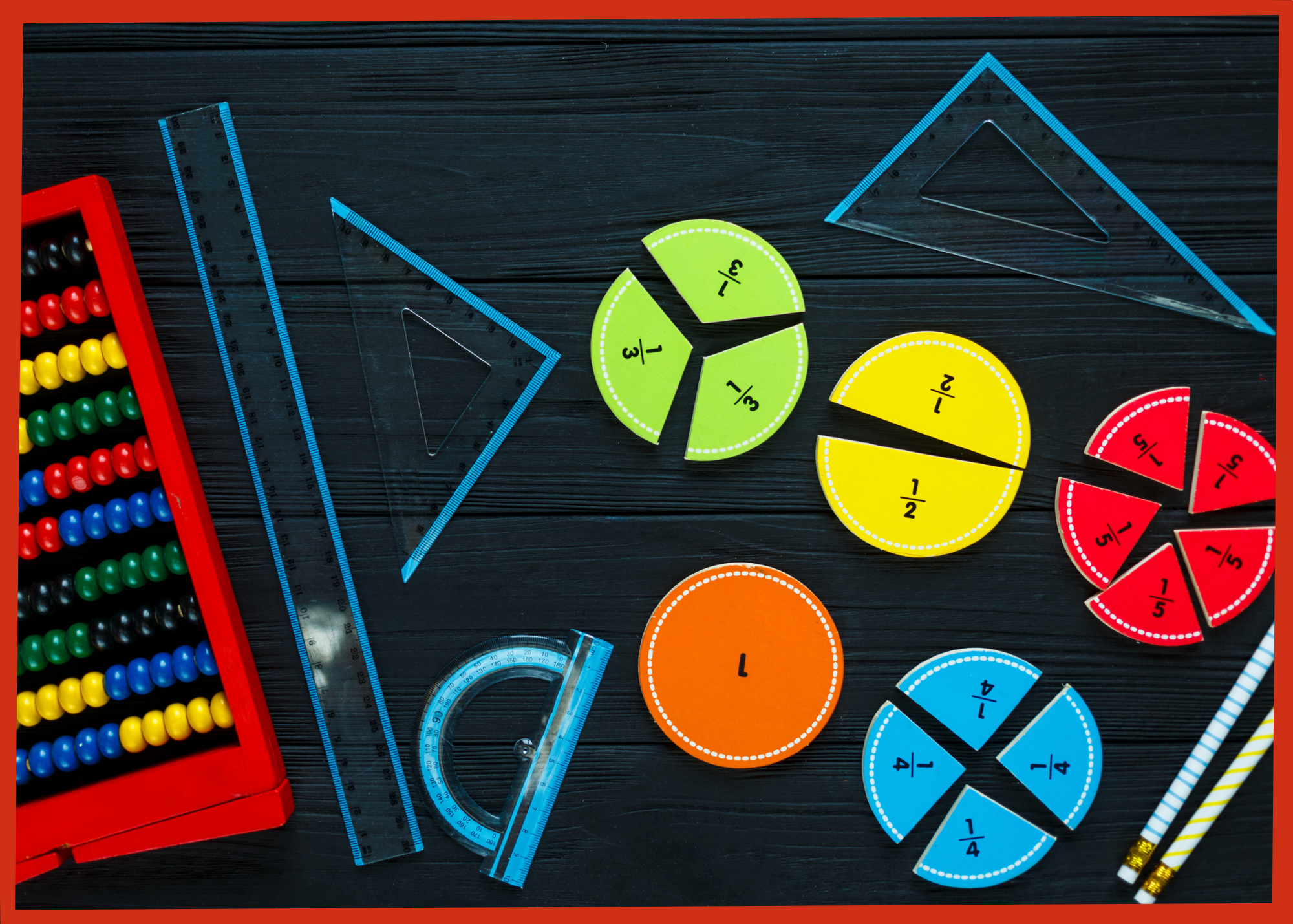
Hands-on activities can help make teaching fractions more fun by providing an engaging and interactive way for students to learn. These types of activities can help support students in better understanding fractions.
By using tangible objects or manipulatives, such as blocks, tiles, or coins, to represent fractions, students can better visualize and understand the concepts. This helps them to engage with the material, instead of just memorizing facts and formulas.
You can also try having your students create fraction models using things such as paper and markers, or do fraction experiments with measuring cups and spoons. These activities can help students to get a better understanding of fractions and they can often be applicable to their everyday life, as highlighted above.
Additionally, hands-on activities encourage collaboration and problem-solving amongst students, which can make learning more enjoyable and students can support one another. Engaging in these types of activities can help students to build confidence in their understanding of fractions, which can lead to a more positive attitude towards the subject.

MAKE LEARNING FUN
Finally, be positive and do your best to make learning fun! Learning fractions doesn’t have to be boring. In fact, it shouldn’t be boring!
Try incorporating music or art into your lesson to make it more fun and engaging. You can also have students create fraction stories, or have them draw fraction pictures. These activities can help to bring fractions to life as well as provide cross-curricular assignments.
When teachers make learning fun, it helps to engage students in the subject and encourages them to retain the information more effectively. Of course, when students are actively engaged in their learning, they are more likely to remember the material and be able to apply it in the real world.
Additionally, a fun learning environment can help to make fractions less intimidating and more enjoyable for students. This can help to build their confidence in the subject and make them more likely to succeed in math, and at school, in the future.
Overall, making fractions fun for your students doesn’t have to be difficult or intimidating, With the right strategies and tools, you can make teaching fractions an enjoyable experience for both you and your students.
What do you think? Is there something I missed that you do in your class that your students love? Let me know!
ENJOYED THIS? HERE ARE SOME OTHER BLOG POSTS ON KATIE IS A TEACHER YOU MAY LIKE:



WANT EVEN MORE? HERE ARE SOME KATIE IS A TEACHER RESOURCES YOU MAY BE INTERESTED IN:



 katieisateacher.com