
TAG games are a cornerstone of physical education for a reason: they’re fun, active, and adaptable to students of all ages and abilities. More than just a simple game of chase, they are an excellent tool teachers can use for developing fundamental motor skills, fostering social-emotional learning, and improving cognitive functions in a dynamic and engaging environment.
When I taught gym full time, I loved having a handful of go-to tag games all the kids knew and enjoyed. These were what I would use for our warm up every day, which was fun, easy, and useful!
When it comes to gym class, I don’t like having a lot of down-time. The time flies by much faster than expected, and I want to have all my routines and structures in place so that students have as much time as possible to be moving, cooperating, and developing skills.
Side note: if you’re interested in checking out my tips for setting up and running your P.E. class, check out my blog post here.

Personally, I like to have the kids begin a warm up (usually a tag game) as soon as they enter the gym. I let them know the game we’re playing and they immediately start moving around. Then, when I feel they’ve gotten enough warm-up time, I’ll blow my whistle (or my harmonica, or whatever it is you use) and have them come into their sitting positions so I can explain our next task to them.
If you teach elementary, you can have them start a game as soon as they enter the gym. If you teach junior high or high school you can have them start as soon as they’re out of the change room.
I start each year (or term) with a games unit. Depending on the weather, I’ll do a mix of indoor games, field games, and tarmac games. Starting the year this way ensures all the kids know the rules to our basic go-to games and I can draw from these easily for the rest of the year.
Tag games can be underestimated, but they are actually highly valuable in a well-rounded physical education curriculum. By strategically incorporating these games, you can address multiple learning standards simultaneously.
First, student physical development is targeted. Tag games are fantastic for improving locomotor skills such as running, jumping, dodging, and fleeing. They also enhance agility, speed, and cardiovascular endurance. The fast-paced nature of the games ensures students are consistently moving, which is crucial for overall health and fitness.
Second, supporting students’ social and emotional learning (SEL). These games provide a low-stakes environment for students to practice essential social skills. They learn cooperation, communication, and teamwork. Games with specific rules or roles, like a “healer” or “rescuer,” teach empathy and helping behaviours. The collaborative nature of tag games can help students build a sense of community and fair play.
Third, they help build cognitive development. Tag games are excellent for improving problem-solving and strategic thinking. Students must make quick decisions, anticipate the movements of others, and adapt their strategies on the fly. This strengthens reaction time and spatial awareness—skills that are transferable to more complex sports and everyday life.
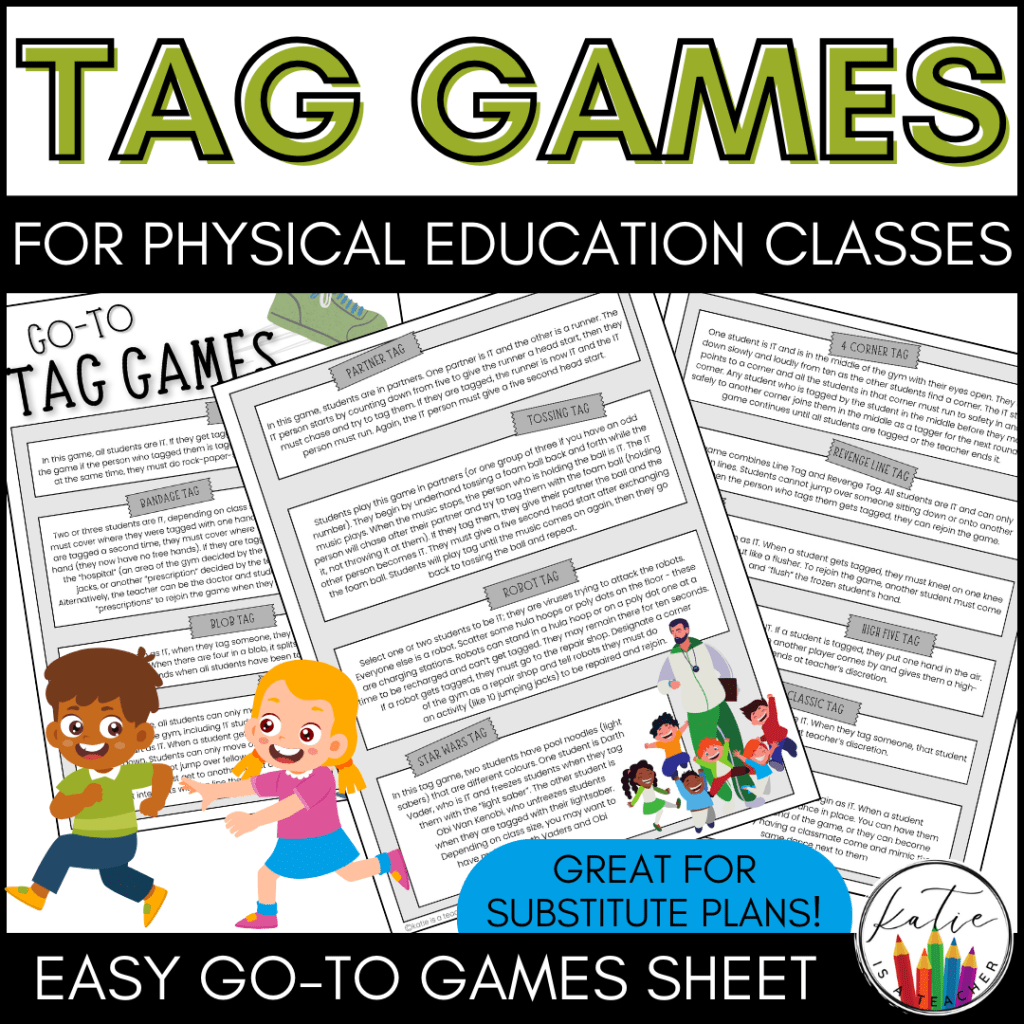
Here are some of my personal favourite tag games to play with my kiddos and which they never seem to tire of! You may have played your own versions of these with different names or slightly different rules. Play around with these! Make them work for you and your students!
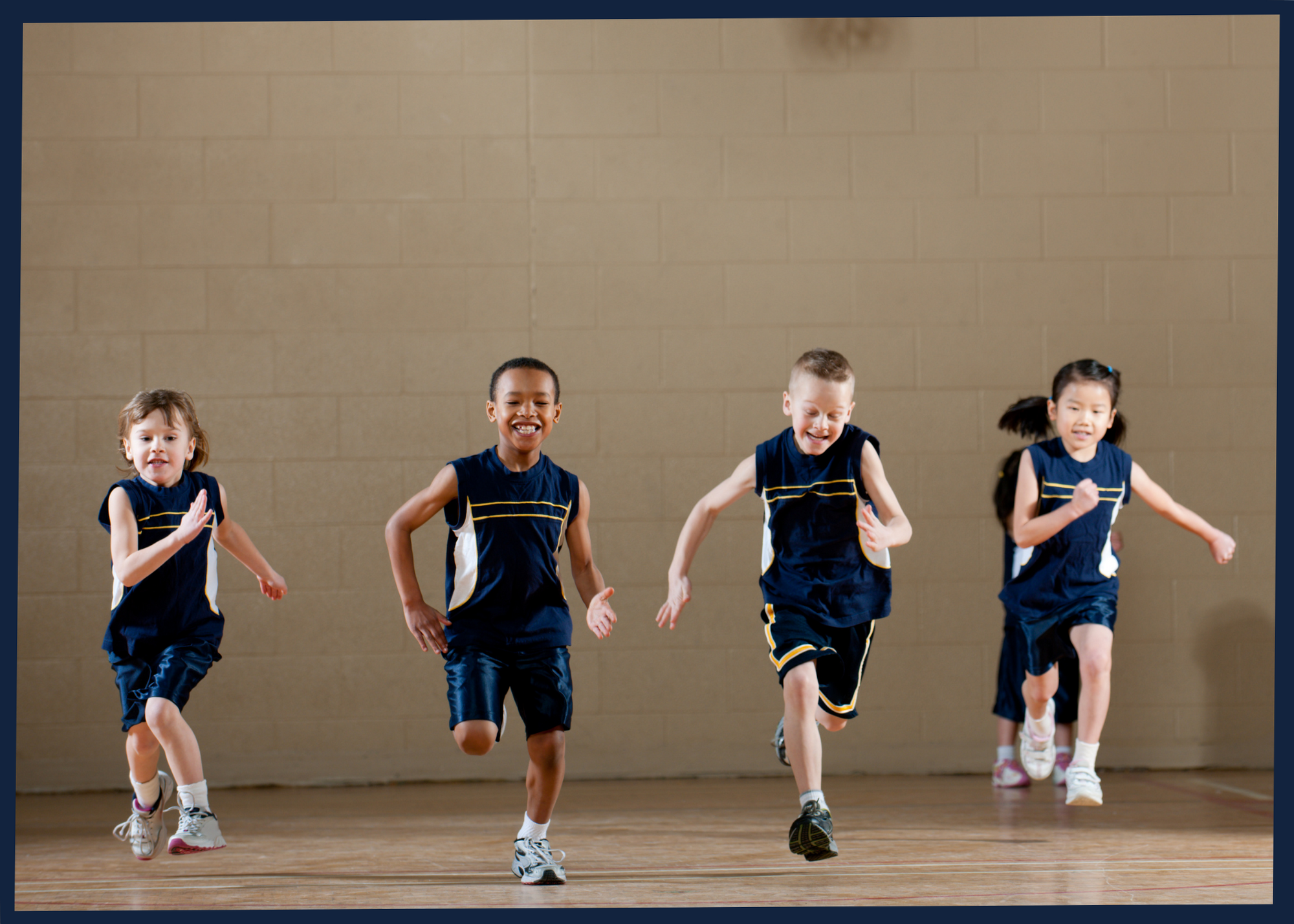
CLASSIC TAG
A couple of years into my teaching career, I was teaching a gym class one day and a student asked me before class if they could play “regular tag” as a warm up that day.
I realised I hadn’t played, or had my students play, a classic game of tag in years! There are so many fun variations of tag that we rarely (if ever) just play good old Tag.
This is the foundational tag game.
Rules: One or more students are designated as “It” and try to tag others. Once a player is tagged, they become the new “It.”
Learning Objectives: Develops basic chasing, fleeing, and dodging skills.
Variations: Add “safe zones” or require students to count to 10 before they can tag after becoming “It.”
Don’t sleep on this one, it’s good ol’ fashioned fun!

REVENGE TAG
Revenge tag is my personal favourite tag game. It’s easy, the kids love it, and there’s very little “down time” so kids are moving for the majority of play time.
Rules: In this game, everyone is “it”. Students run around and try to tag one another. When they get tagged, they sit down. They can rejoin the game when the person who tagged them gets tagged.
Learning Objectives: Speed, agility, and safety.
If students tag one another at the same time, they must do “rock-paper-scissors” to see who must sit down.

COLOUR TAG
This is a fun game that also helps students’ listening skills.
Rules: In this game, the teacher calls out a colour and whoever is wearing that colour becomes “it” – so there are multiple taggers. I will let the kids play for a few minutes, then blow my whistle and call a new colour, restarting the game so everyone joins in again.
Learning Objectives: Listening skills, as well as basic fleeing and chasing skills.
Variations: You can play so that kids who are tagged must sit down and wait for the game to restart, they can do a task (like 10 jumping jacks) to rejoin, you can play “revenge tag” style, or so on. It’s up to you!
Also try using patterns rather than colours, for example “anyone with striped on their socks is it!”

TOILET TAG
This might be the silliest tag game ever, but kids love it (potty humour, am I right?). It’s definitely a humorous game that’s a hit particularly with younger students.
Rules: When a player is tagged, they must kneel down on one knee with an arm raised like a toilet flusher. To get “unflushed,” another player must tap the raised hand.
Learning Objectives: Provides an engaging way to practice chasing and fleeing skills while incorporating a fun, lighthearted element.
Variations: The “unflusher” must perform a silly dance or say a password to unfreeze their teammate.
For added fun, you can have the students make a flushing noise when their hand has been “flushed”.

BRITISH BULLDOG
In this classic tag game, you can switch up rules depending how many players you have. This is a classic that promotes strategic movement!
Rules: All players start at one end of the gym or field. One or two players, the “bulldogs,” start in the middle. The goal is to run from one end to the other without being tagged. Tagged players become bulldogs and join the players in the middle. The game continues until only one player remains.
Learning Objectives: Encourages strategic timing and quick decision-making.
Variations: Players can only move after the teacher says a specific word, or players can only run on certain lines on the gym floor.
Have the last student (or students) at the end of the game start as the “It” for the next round!

BLOB TAG
This is a great game that emphasises teamwork and spatial awareness. I’ve also seen it called “chain tag”.
Rules: One or two players start as “It.” When they tag someone, the tagged player links arms with “It.” This creates a growing “blob” or “chain.” Only the players on the ends of the chain can tag others. If the chain breaks, the players must quickly re-link before they can continue tagging.
Learning Objectives: Promotes cooperation, communication, and working as a cohesive unit.
Variations: Add multiple starting blobs or have a maximum number of players in a single blob.
Even more variation… another version of this is also virus or amoeba tag, where as soon as the blob reaches four students, it splits into two different blobs. I find this to be a safer version as students are less likely to trip over one another.

COMPLIMENT TAG
This is a simple and straight-forward game of tag, and it’s nice to play when you want to promote kindness in your room, too. Sometimes I’ll play it outside in health class on a nice day. This game focuses on positive social interaction.
Rules: The rules are the same as classic tag, but when a player tags another, they must give them a genuine compliment.
Learning Objectives: Encourages positive social-emotional learning and positive peer interactions.
Enjoy this fun and uplifting game!

DOCTOR TAG
This is a great game you can play as tag or as dodgeball. This game is a great way to introduce a cooperative element to a competitive game!
Rules: One or more players are the “doctors” and cannot tag. The remaining players are divided into two teams, with each team having its own doctor. All players (except doctors) are “It.” When a player is tagged by an opponent, they must sit down. Only their team’s doctor can tag them to “heal” and release them back into the game.
Learning Objectives: Focuses on strategic thinking, teamwork, and protective movement.
Variations: Introduce dodgeballs for students to tag with!
This is always fun because the teams are trying to figure out who the other tam’s doctor is and tag them, so no one can be “rescued” and rejoin the game.

FREEZE TAG
Another classic tag game and a staple for a reason, this game focuses on spatial awareness and teamwork.
Rules: One or two players are “It” and taggers. When a player is tagged, they must freeze in place, often in a specific pose like a “statue” or with their legs and arms apart like a star. They can be “unfrozen” when a non-tagged player crawls under their arms or legs or high-fives them.
Learning Objectives: Promotes agility, endurance, and cooperative teamwork.
Variations: “Jailbreak Tag” where frozen players go to a designated “jail” and can be freed by a teammate’s tag.
Have fun seeing how well little kids can freeze in this one!

MR. WOLF
What time is it, Mr. Wolf? is a great game for younger students. I also find that older students often forget about it as they get older, but then love revisiting it! It’s a great game for listening and timing.
Rules: One player is the “Mr. Wolf” and stands with their back to the other players. The other players ask, “What time is it, Mr. Wolf?” Mr. Wolf responds with a time (e.g., “four o’clock”). The players take that many steps toward the wolf. When the players ask again and Mr. Wolf says, “Dinner time!” they turn around and chase the players back to their starting line. Any player tagged becomes the new wolf.
Learning Objectives: Develops listening skills, patience, and explosive running.
Have a great time with this one!

ZOMBIE TAG
Zombie tag is almost as silly as toilet tag, but not quite. Kids love it because they like zombies and think pretending to be one is fun. It’s a silly and fun game that can be adapted for different times of the year.
Rules: One or two players are “zombies” and must shuffle or walk without running. When a zombie tags a human, the human becomes a zombie.
Learning Objectives: Improves walking and shuffling movements and encourages strategic slow-motion play.
Variations: Add “safe zones” where humans can’t be tagged.
In theory, this game shouldn’t work because the zombies can’t move fast enough to catch other players, but enough kids want to be tagged since they want to become zombies, that pretty soon the numbers work in the zombies’ favour and they can tag more students.

HOT DOG TAG
Hot dog tag is super silly, but I find that even my older junior high kids enjoy it and have a laugh when we play. This is a simple and engaging game for a variety of ages.
Rules: One or two players are “It.” When a player is tagged, they must lie on their back with their legs and arms in the air, like a “hot dog.” To be unfrozen, two other players must pretend to put a “bun” on them by standing on either side and tapping their hands.
Learning Objectives: Fosters teamwork and cooperation.
Have a blast playing this one!

LINE TAG
I love line tag because you can have kids play it running or walking. So if you have a headache one day, the walking version is definitely your friend.
In this game, students can only move along the gym floor lines. They cannot jump between lines or over other students. Once a student is tagged, they must sit down where they were tagged, creating an obstacle other students cannot move around.
You can play this with one or two “it” students, or you can combine it with revenge tag and make everyone it.

COPS AND ROBBERS
This is a fun game and, after playing one round, you can switch which team are the cops and which are the robbers so everyone gets a turn to do both. This game teaches strategy and highlights the importance of both offense and defense.
Rules: The class is split into two teams: Cops and Robbers. The Cops’ goal is to tag all the Robbers and send them to a designated “jail” area. Robbers can free their teammates from jail by tagging them. The game ends when all Robbers are in jail or after a set time limit.
Learning Objectives: Develops offensive (tagging and evading) and defensive (guarding the jail) strategies.
Variations: Change the roles so that the Robbers can tag the Cops, sending them to jail instead.
NOTE: if the terms “cops” and “robbers” are triggering for any kids, use different words. You may not even realise that these are triggering, so I suggest using different terminology all the time. I just used “cops and robbers” here because it’s the title most people are familiar with. Try things like dragons and centaurs, wolves and bears, etc.

FOUR CORNERS
There are two versions of this game – one where the “it” student closes their eyes and all the others have to whisper and sneak around, and the other that I prefer.
In my version of four corners, kids are running and moving the whole time. I don’t like the original version as much because there’s too much sitting around and watching others play when kids are “out”.
This game requires quick decision-making and awareness of others.
Rules: In the original game, one player is “It” and stands in the middle of the gym, eyes closed. The other players scatter to one of the four corners of the gym. “It” counts to ten and then calls out a number between one and four. Any players in that corner are “out” and must sit down. The game continues until one player remains.
Learning Objectives: Develops strategic thinking and quick decision-making under pressure.
Variation: Number each corner of the gym from 1-4 and make sure all the kids know the numbers. Start with one or two kids in the centre and the rest of the students must choose one of the four corners of the gym to go to. The student in the centre calls out a number from 1-4 and the students from that corner must run to one of the other three corners safely. If they get tagged running to a new corner, they must join the “it” person in the middle and try to tag students in the next round.

HOSPITAL TAG
In this game, all of the students are “it”. If they get tagged once, they must put one hand on the spot they’ve been tagged, and continue playing and attempting to tag others with one free hand.
If they get tagged a second time, they put their second hand on the spot they’ve been tagged. Now, they cannot tag others, so they simply run around and avoid being tagged.
If the student is tagged a third time, they must go to the “hospital” (a designated corner of the gym or playing area) and complete a task to re-join the game. I’ll make their task something like jumping jacks, sitting against the wall, burpees, or so on.

OCTOPUS TAG
This is a great game that requires players to be aware of the “taggers” and their surroundings.
Rules: One student is the “octopus” and stands in the middle of the playing area. All other players are “fish” and stand on one sideline. When the octopus yells “go,” the fish try to run to the other side without being tagged. If a fish is tagged, they become “seaweed” and must stand in place, waving their arms. Seaweed can tag other fish that come within arm’s reach. The game continues until all fish are tagged.
Learning Objectives: Promotes agility, dodging, and spatial awareness.
This is a great game for a ton of ages!

SHARKS AND MINNOWS
A thrilling game that combines chasing, fleeing, and strategic movement.
Rules: Two or three students are “sharks” and stand in the middle of the playing area. All other students are “minnows” and stand on one side of the area. When the teacher says, “Go,” the minnows try to run to the other side without getting tagged by a shark. If a minnow is tagged, they become seaweed (standing in place) and can try to tag other minnows with their arms.
Learning Objectives: Enhances speed, agility, and the ability to make quick decisions in a crowded space.

WITCHES AND WIZARDS
This is a fun game to play around Halloween time with elementary students!
Rules: The class is divided into two teams: Witches and Wizards. Witches try to “freeze” wizards by tagging them. Wizards, in turn, can “unfreeze” their teammates. A unique twist is that when tagged, players engage in a quick round of rock-paper-scissors to determine the outcome. The loser is frozen.
Learning Objectives: Combines physical activity with a strategic element and lighthearted competition.
Have fun with this one!
ANACONDA TAG
This is a great game that helps students with coordination and teamwork!
Rules: One student starts as the “baby snake” and tries to tag others. As the snake grows, teamwork becomes crucial, as only the head and tail of the snake can tag. If the chain breaks, the team loses, providing a perfect opportunity to discuss what happens when teams don’t collaborate effectively.
Learning Objectives: Excellent for teaching collaboration and the consequences of a lack of teamwork.
Your students are sure to love this one!

POPCORN TAG
This is a super silly and fun game! Student of all ages love it, even a lot of the older ones!
Rules: One or two players are “It.” When a player is tagged, they sit on the ground like a kernel of “popcorn.” To get back in the game, another player must give them a high-five, “popping” them back into play.
Learning Objectives: Encourages cooperative play and continuous movement.
Your kids will love this one!

FIRE AND ICE TAG
I love playing this game when the weather starts getting a bit colder!
Rules: One or two players are “ice” and they tag people. When a person is tagged, they must freeze. One or two players are “fire” and they unfreeze people by tagging them. The game continues until all players are frozen.
Learning Objectives: Teaches the importance of strategy, teamwork, and quick decision-making.
This is a great game for all ages!

COUCH POTATO TAG
This is a great game and a good play on the term “couch potato”; you can also use it as a jumping off point to chat with students about health and wellness!
Rules: The game starts with a few taggers. When a player is tagged, they must sit down and act like a “couch potato.” To get back into the game, a teammate has to run over and do a quick fitness activity with them (e.g., five jumping jacks, three push-ups).
Learning Objectives: Encourages active participation and incorporates fitness elements into a traditional tag game.
Have a great time with this game!
PANCAKE TAG
This is a really silly game, and you can also play with “syrup” and “butter” (I like using beanbags and pool noodles).
Rules: Two players are taggers and have a foam frisbee or a paddle and a beanbag. When a player is tagged, they must lay on their back like a pancake. A rescuer can get them back into the game by placing their “pancake” on top of their head and moving to a new spot.
Learning Objectives: This game teaches the importance of object manipulation, as well as chasing and fleeing.
Your kids are sure to love this one!

TAIL TAG
This is a great game for all ages; I love to use it with my older students as a lead in to our flag football unit.
Rules: Each player wears a flag or a scarf tucked into their shorts. The objective is to pull other players’ scarves or flags while protecting your own. The game can be played individually or in teams. When a flag is pulled, the player is “out” or must go to a “jail” and perform a quick activity to get back in.
Learning Objectives: Enhances dodging, evasion, and strategic planning skills.
This one is even great as a warm up game for your flag-football team!

NOODLE TAG
I admit I use noodles for a lot of my game with the younger students because it helps them learn how to tag appropriately without hurting one another.
Rules: Use foam pool noodles as “tagging” tools. This reduces the risk of injury and makes the game more fun. Players who are tagged must perform a specific action, such as a dance or a short exercise, to get back into the game.
Learning Objectives: Improves agility and provides a safer way to practice tagging.
This is a fun one even for the odler kids because using a noodle is always fun!

When incorporating these games into your PE curriculum, remember to prioritise safety, inclusivity, and fun! Make sure you set clear boundaries and clearly define the playing area to prevent accidents.
Also ensure you establish ground rules before all games! Before starting, review rules about safe tagging (no pushing or shoving) and “no-contact” zones.
Adapt you games for all your students’ abilities in order to be inclusive. For instance, allow walking instead of running for students with mobility challenges.
And, of course, make sure you are always rotating taggers! Ensure every student gets a chance to be “It.” This prevents one or two students from doing all the work and encourages participation.
By implementing these games and incorporating a professional, engaging tone, you can significantly enhance your students’ physical, social, and emotional development, making your PE class a highlight of their school day.
What do you think? Have you played any of these games? Are there any others that you love and that I’m missing? Let me know in the comments below!
Enjoyed this? Here are some other blog posts on Katie is a Teacher you may like:



Want even more? Here are some Katie is a Teacher resources you may be interested in:

 katieisateacher.com
4 thoughts on “23 Awesome TAG Games You Should be Playing in P.E. Class”